East Algarve vs west Algarve is usually the first comparison buyers make, but the central Algarve belongs in the same conversation, because it is the part of the coast most people picture first. The three regions share one coastline and one motorway, yet daily life in each is noticeably different. The west is wilder and more Atlantic, the centre is polished and busy, and the east is quieter and more Portuguese in rhythm.
The difference shows up in ordinary things: who sits next to you at the café in the morning, how busy the beach is in August, and whether the waiter answers you in English or Portuguese. Which part of the coast you choose will shape your everyday life far more than the map suggests, so it is worth understanding before you look at a single property.
Key takeaways
- The Algarve divides into three broad regions: the west around Lagos, the centre around Loulé, the east around Tavira.
- The central Algarve, home to Vilamoura, Quinta do Lago and Vale do Lobo, is the most international region.
- The west suits outdoor lovers who accept more wind, Atlantic swell and a quieter winter.
- The east suits buyers who want calm water, a Portuguese pace and easy access to Spain.
- Faro airport sits in the central Algarve, so travel time to it grows as you move east or west.
How the three regions differ
The simplest way to picture the Algarve is as one long coast with three characters. The west, from Sagres to around Portimão, faces the open Atlantic on two sides, and the coast there is cliffs, coves and surf. The centre, roughly from Albufeira to Faro, holds the resorts, the marinas, most of the golf and the airport. The east, from Olhão to the Spanish border at Vila Real de Santo António, is sheltered by the Ria Formosa lagoon and its barrier islands.
The A22 motorway (Via do Infante) links all three, so no part of the region is cut off. What changes as you drive is the number of people, the amount of English you hear, and how much of life is organised around visitors.
West Algarve: wild coast, outdoor life
The west Algarve is the right choice if nature and the outdoors matter more to you than convenience. Lagos is the main town, with a walled old centre, a marina and a year-round population that includes many younger international residents. Further west, Sagres and the Costa Vicentina feel almost remote, with protected coastline and beaches that face straight into the Atlantic.
This is surfing and walking country. The cliffs around Ponta da Piedade, the Fishermen’s Trail along the west coast and the green hills of Monchique inland shape how people spend their weekends. The water is colder and livelier than in the east, and the wind is part of daily life.
The trade-off is winter. Outside Lagos and Portimão, many villages go very quiet between November and March, and some restaurants close for weeks at a time. The drive to Faro airport is also the longest of the three regions, which matters if you plan to fly in and out often.
Homes range from apartments and townhouses in Lagos to villas on the hills behind the coast and rural properties inland. If a country house near Aljezur or Monchique appeals, factor in the practical questions that come with rural property: road access, water supply and the upkeep of the land around it.
Central Algarve: polished, busy and international
The central Algarve suits buyers who want convenience, services and a largely international community. It includes the so-called golden triangle of Vilamoura, Quinta do Lago and Vale do Lobo, plus Albufeira, Almancil and the inland market town of Loulé. Faro airport is on the doorstep, and so are most of the region’s golf courses, private clinics and international schools.
Days here tend to run on an easy routine: a round of golf or a walk along the marina in Vilamoura in the morning, lunch on a terrace in Almancil, and the beach at Quinta do Lago or Vale do Lobo in the late afternoon. All three golden triangle resorts sit within Loulé municipality, and their gated streets, manicured gardens and quiet, well-kept feel set the tone for much of the area.
Daily life here can be very easy. Shops, restaurants and many medical and legal services work comfortably in English, and resort communities often look after gardens, pools and security for you. Loulé’s covered market and its Saturday market give the area a working Portuguese town at its centre, which many buyers end up valuing more than they expected.
The honest downside is summer. From July to the end of August the central coast is at its busiest, roads around Albufeira and Vilamoura fill up, and restaurant tables need booking. If you want peace in August, that deserves a proper think before you commit.
East Algarve: calm, Portuguese and close to Spain
The east Algarve is the choice for buyers who want a slower pace and a place that feels Portuguese first and touristic second. Tavira is the best-known town, with its old bridge over the Gilão river, its churches and its whitewashed streets. Olhão is a working fishing town with one of the region’s liveliest markets, and the Ria Formosa lagoon shapes the whole coastline.
The beaches here are mostly on sandy barrier islands such as Ilha de Tavira, reached by short ferry crossings from the mainland. The sea on this side of the Algarve is generally calmer, and families with young children often prefer it for that reason.
Spain is close. The bridge over the Guadiana river near Vila Real de Santo António takes you across the border, and Seville is within reach for a day out.
The trade-off is choice. There are fewer international services, fewer English speakers once you leave the towns, and a smaller pool of homes that match typical international wish lists. Learning some Portuguese makes a real difference to how settled you feel here.
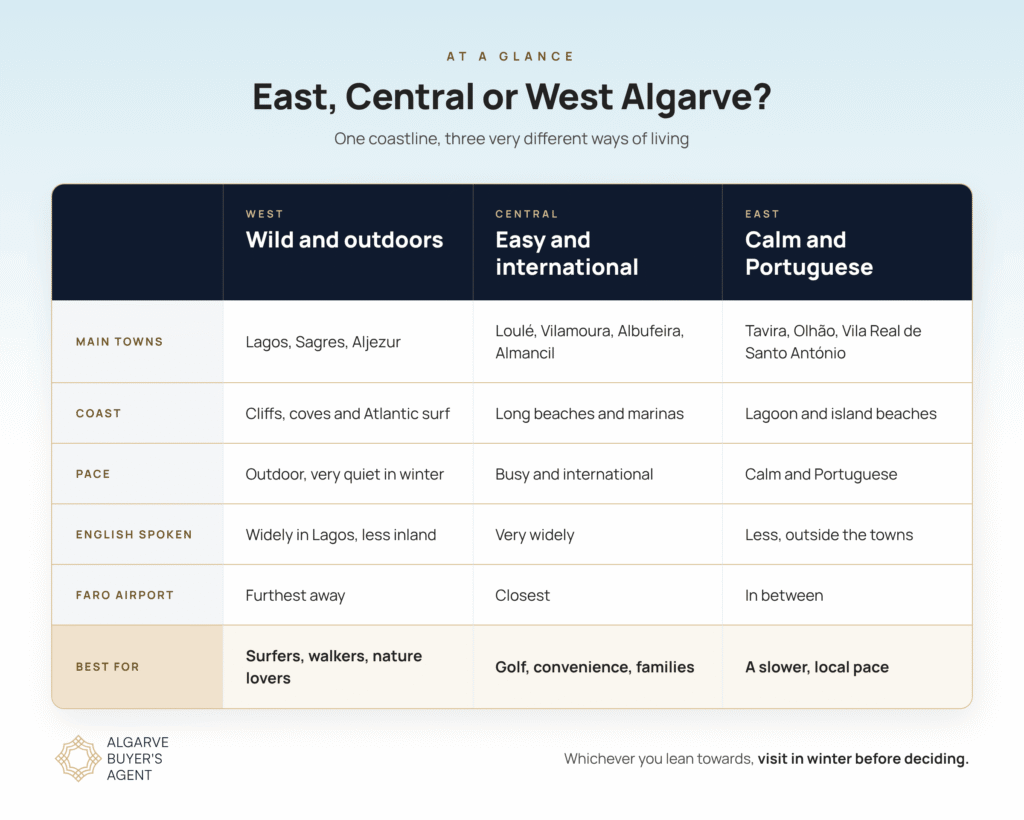
East Algarve vs west Algarve at a glance
The clearest way to compare the regions is by what each one asks of you. The centre asks you to share the coast with more people, the west asks for tolerance of wind and quiet winters, and the east asks for patience with a smaller market and a more Portuguese way of doing things.
Which region fits your budget?
The central Algarve is generally the most expensive part of the coast, and your money tends to go further as you move east, west or inland. Day to day, the difference shows up in small things. Lunch at a family-run tasca in Olhão or coffee in a village square behind Tavira feels very different from an evening at a marina restaurant in Vilamoura, in the atmosphere as much as on the bill.
Within each region, the individual home matters as much as the town. A flat in the old centre of Lagos or Tavira, a sea view or a short walk to the beach are what most buyers want, so they are rarely where the compromises are found.
Buyers who are flexible often find more space for the money slightly inland, in the hills around Loulé or the villages behind Tavira. The trade-off is a car for every errand.
Which region fits your life?
Match the region to how you want an ordinary week to look. If you want to walk to restaurants, play golf and have an airport close by, the central Algarve is the natural fit. If your ideal week involves surfing, coastal walks and very little traffic, the west makes sense. If you want markets, island beaches and a quieter, more local rhythm, look east.
Families often lean towards the centre because of the international schools and services around Loulé and Almancil. Retirees are drawn to both ends of the coast: Tavira’s calm suits many, while others prefer the services of the centre. Lagos appeals to remote workers who want nature on the doorstep.
Visit in winter before deciding. The Algarve in February is a different place from the Algarve in August, and the difference is greatest in the west and the east.
For more background, see our guide to navigating the Algarve property market and our piece on why buyers choose the Algarve for their next home.
Frequently asked questions
Is the east or west Algarve better to live in?
Neither is better overall; they suit different people. The west Algarve around Lagos suits buyers who want a wild Atlantic coast, surfing and walking, and who accept more wind and quieter winters. The east Algarve around Tavira suits buyers who want calm water, a Portuguese pace of life and easy access to Spain. Visiting both in winter is the most reliable way to decide.
What is daily life like in the east Algarve?
Daily life in the east Algarve is slower and more Portuguese than in the centre. Mornings often start at the market in Olhão or Tavira, and summer days are spent on island beaches such as Ilha de Tavira, reached by a short ferry. The sea is calmer, the towns stay lived-in all year, and Spain is close enough for a day out in Seville.
Is the east Algarve quieter than the west?
The east Algarve is generally quieter year-round, with a calmer coastline and a more Portuguese daily rhythm. The smaller villages of the west can be even quieter in winter, when some restaurants close for the season. In summer, both regions are calmer than the central Algarve, which receives the largest share of visitors.
How far is Faro airport from the east and west Algarve?
Faro airport sits in the central Algarve, so it is closest to Loulé, Vilamoura and Almancil. Tavira in the east and Lagos in the west are both connected to the airport by the A22 motorway. Driving times are longest from the far western end of the region, around Sagres and Aljezur, and shorter from anywhere in the east.
Is the Algarve good for families?
The Algarve works well for families, and the central region is usually the most practical choice. International schools and private clinics are concentrated around Loulé, Almancil and Faro, and English is widely spoken. Families who want a calmer setting often consider the east, where the sheltered island beaches of the Ria Formosa are popular with young children.
Finding the part of the Algarve for you
Choosing between east, central and west is really a choice about the life you want around your home, and it is worth taking your time over it. Algarve Buyer’s Agent covers the whole coast from Sagres to Tavira and works only for buyers. You can read more about our services, or book a free 45-minute consultation at algarveba.com/contact to talk through which region suits your plans.